 +852 29871201
 Parent Portal
The Importance of the Montessori 3-Hour Work Cycle for Early Childhood Focus
Why uninterrupted, self-directed time in an AMI-prepared environment builds deep concentration, executive function, and lifelong self-discipline.
In today’s fast-paced educational landscape—especially in high-demand environments like Hong Kong—children’s days are often broken into rigid, 30-minute subject blocks. However, in an authentic Association Montessori Internationale (AMI) classroom, you will notice a starkly different rhythm: a long, protected block of time known as the 3-Hour Work Cycle.
Rather than moving from task to task at the sound of a bell, children aged 3 to 6 select their own activities, work at their natural pace, and immerse themselves in learning without artificial interruptions.
Comparing Timetables: Traditional vs. Montessori
The Psychological Curve & "False Fatigue"
Parents often ask: "Can a 3-year-old really focus for three hours?" Dr. Maria Montessori discovered that a child’s concentration follows a natural curve during an extended work block:
- 1. Introductory Choice (0 – 45 mins): The child selects accessible, comforting tasks—such as pouring, polishing, or basic math beads—to settle their mind into the classroom environment.
- 2. False Fatigue (Around 60 – 90 mins): The classroom temperature often rises as children finish initial tasks. They may wander, observe peers, or appear restless. In traditional settings, teachers step in to stop this. In Montessori, trained AMI educators step back, giving children space to self-regulate.
- 3. Deep Work & Mastery (90 – 180 mins): Having moved through false fatigue on their own, children select their most challenging work of the day in language, mathematics, or culture, remaining deeply absorbed for extended periods.
Key Cognitive Benefits for Growing Learners
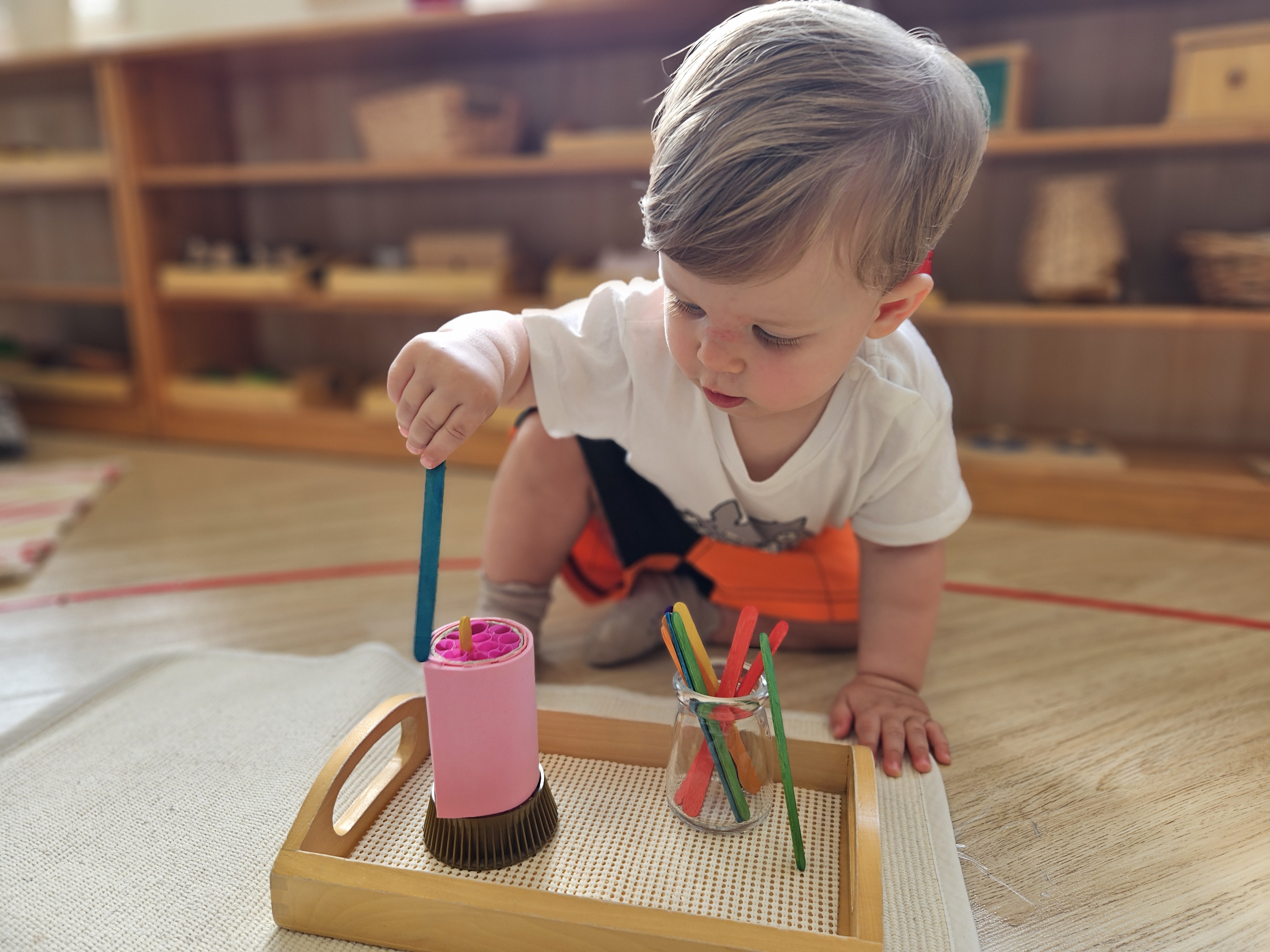
Selecting a material from a shelf, carrying it carefully to a rug, completing multi-step operations, and returning it cleanly builds neurological pathways for planning, emotional regulation, and working memory.
When learning is not cut short by a bell or driven by gold stars, children experience genuine joy from mastering complex skills for themselves.
A child fascinated by advanced math can spend an uninterrupted hour exploring decimal systems with golden beads, while another child takes the time they need to perfect handwriting or practical life skills.